Made with
ConceptDraw
DIAGRAM 18

Marketing Infographics

Marketing Infographics is a very popular tool that allows to represent the complex data, knowledge, and other marketing information in a simple, visual and attractive graphical form.

But how to draw Marketing Infographics simply and quickly? ConceptDraw DIAGRAM diagramming and vector drawing software extended with unique Marketing Infographics Solution from the Business Infographics Area will help you design marketing infographics without efforts.
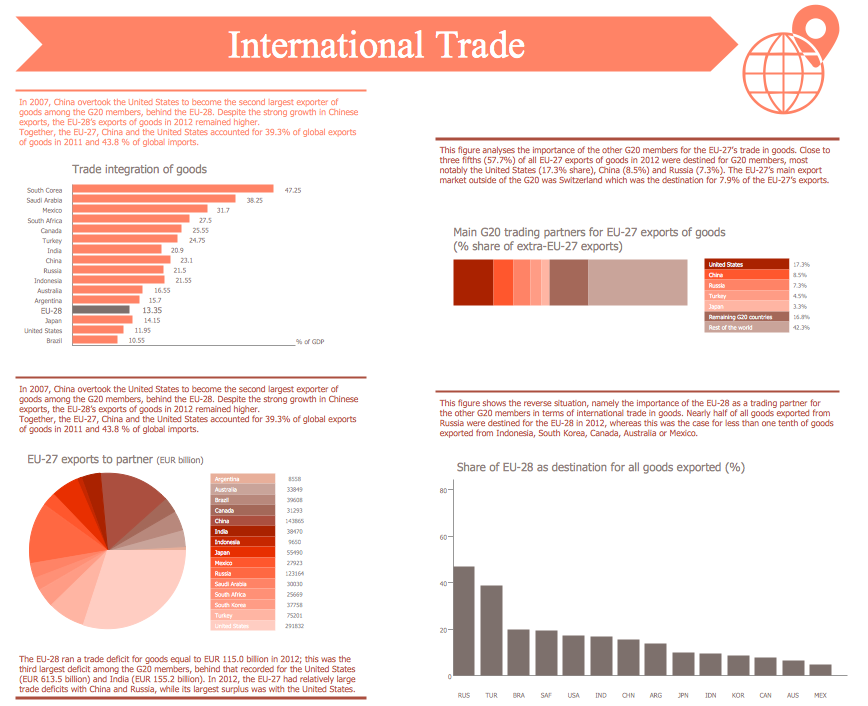
Marketing Infographics *

Example 1. Marketing Infographics - International trade statistics EU in comparison with the Group of Twenty

Marketing Infographics Solution provides easy-to-use infographics drawing tools, large collection of different marketing infographics, content marketing infographics and many other types of samples and templates to be filled in.
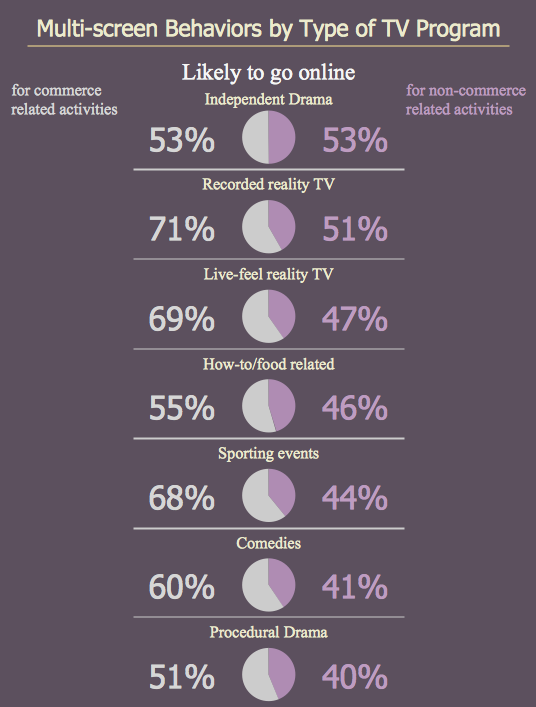
Marketing Infographics - Multi-screen behaviors by type of TV program

Example 2. Marketing Infographics - Multi-screen behaviors by type of TV program

Marketing Infographics Solution offers also 11 libraries with great quantity of predesigned marketing-related vector stencils. Use these objects for effectively and quickly drawing professional looking, interesting and attractive marketing infographics.
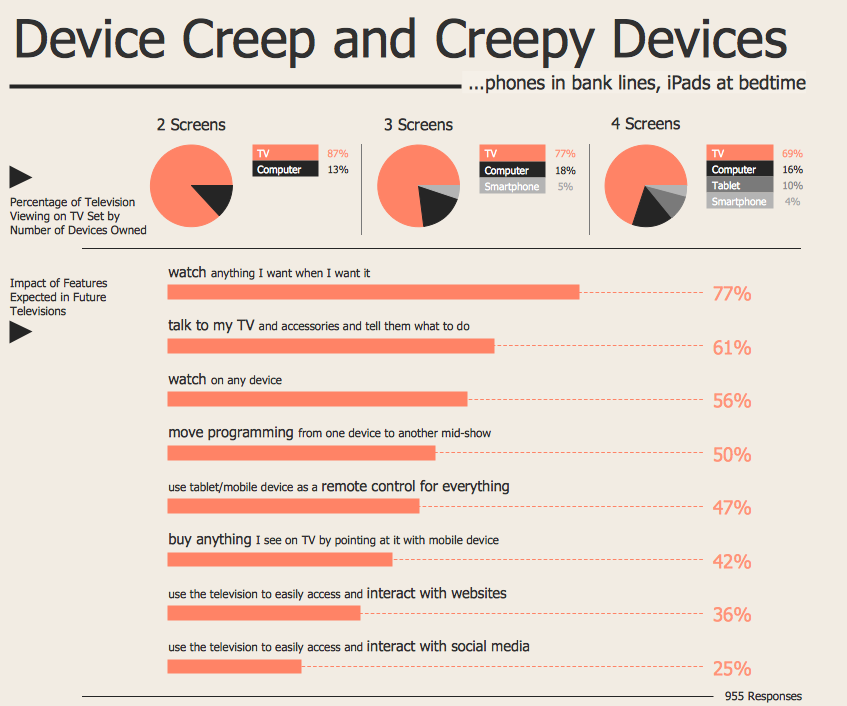
Marketing Infographics - Device Creep and Creepy Devices

Example 3. Marketing Infographics - Device Creep and Creepy Devices

The Marketing Infographics samples you see on this page were created in ConceptDraw DIAGRAM using the vector objects from the Marketing Infographics Solution libraries. These examples successfully demonstrate solution's capabilities and the professional results you can achieve using it. An experienced user spent 10 minutes creating every of these samples.

Use Marketing Infographics solution to design your own Marketing Infographics simply and fast.

All source documents are vector graphic documents. They are available for reviewing, modifying, or converting to a variety of formats (PDF file, MS PowerPoint, MS Visio, and many other graphic formats) from the ConceptDraw STORE. The Marketing Infographics Solution is available for ConceptDraw DIAGRAM users.


THREE RELATED HOW TO's:
It is easy to recreate any informational system structure using diagrams. There are three main components of any ER diagram: entity, attribute and relationship. Basing on these three components, one can define other, less used elements, such as weak entity or relationship, derived attribute, recursive relationship etc. This is the set of graphic elements of ERD Chen's notation. This ERD notation is used to represent an entity–relationship models. It involves the set of geometric forms: rectangles - depicting entities, ovals - representing attributes and diamonds depicting relationships assigned for first-class objects, that can have relationships and attributes of their own. Connections are displayed with arrowed lines. It is known that the Chen's ERD notation is used to show a detailed view of entities and relationships. ConceptDraw Entity-Relationship Diagram solution from the Software Development section of Solution Park provides the ability to create ERD of database structure for software development purposes using the Chen’s notation elements.Components of ER Diagram *
Picture: Components of ER Diagram
Related Solution:
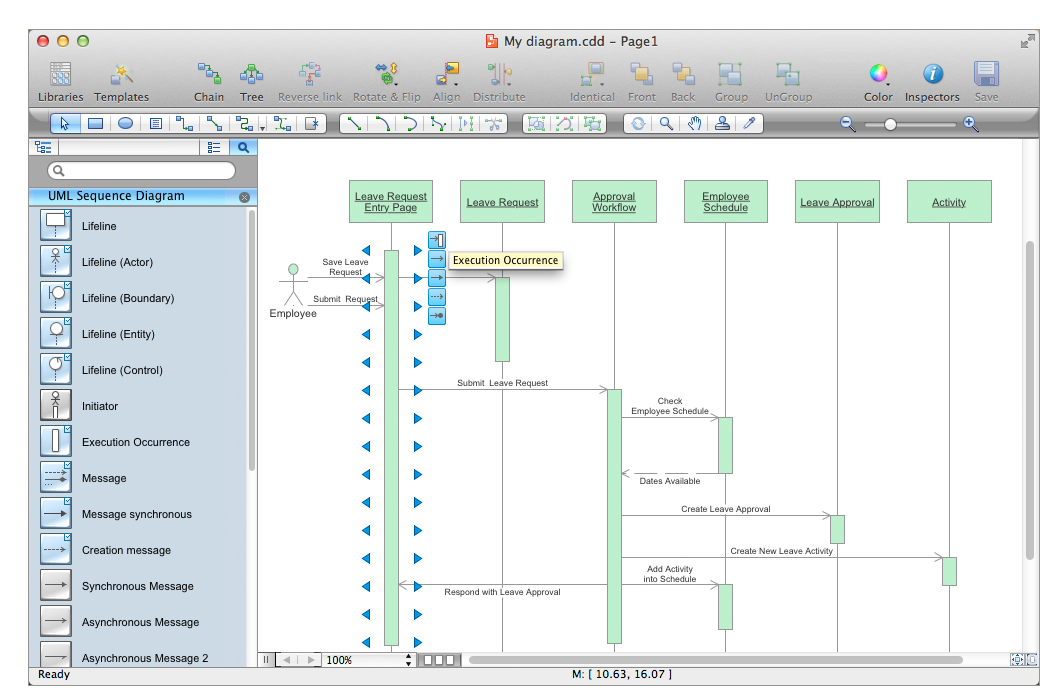
The Rapid UML solution from Software Development area of ConceptDraw Solution Park includes 13 vector stencils libraries for drawing the UML 2.4 diagrams using ConceptDraw DIAGRAM diagramming and vector drawing software.Design Elements for UML Diagrams *
Picture: Design Elements for UML Diagrams
Related Solution:
ConceptDraw DIAGRAM is a flowchart design software. There are large collections of professional flowchart symbols for process flow diagrams, standard flowchart symbols and colored basic flowchart symbols. Built-in examples and video lessons allow users to get started immediately and do drawing of virtually any type of flowchart or process flow diagramsFlow Chart Creator *
Picture: Flow Chart Creator
Related Solution:
ConceptDraw
DIAGRAM 18